Team NinjaCat
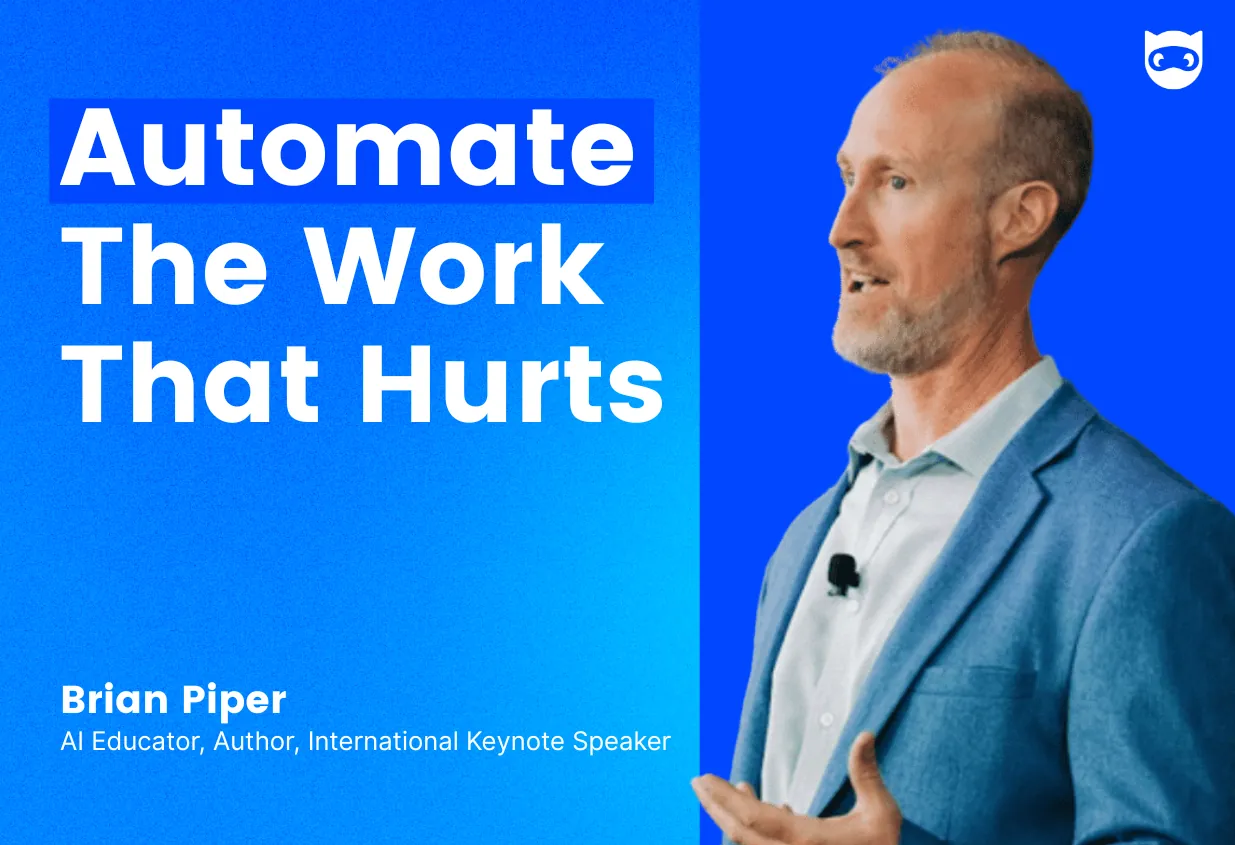
If you’ve spent any time around content teams lately, you’ve probably noticed the same thing I have: everyone wants AI to make their work faster, better, and magically scalable. But most teams are bolting AI onto workflows that were never built for speed—or even clarity—in the first place. And when you accelerate a messy system, you don’t get transformation. You get chaos, only faster.
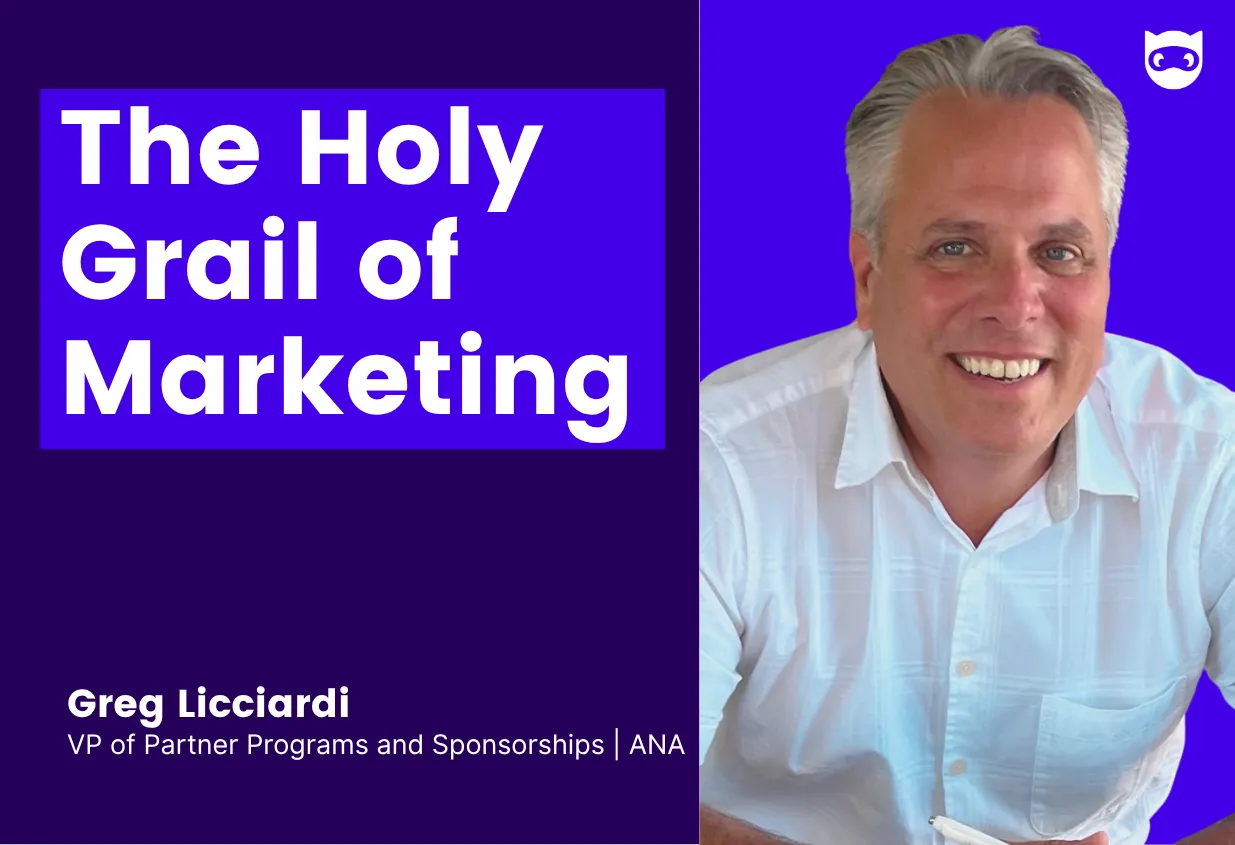
Brian Piper is a veteran digital content strategist, author, and international speaker with nearly 30 years of experience helping organizations turn data, storytelling, and emerging technology into scalable content operations. He co-wrote Epic Content Marketing, Second Edition with Joe Pulizzi, authored Epic Content Marketing for Higher Education, and leads content strategy and assessment at the University of Rochester.
And this is exactly why Brian cares so much about rethinking the work beneath the work. AI isn’t a magic creative button—it’s an accelerant. If the underlying process is solid, AI helps teams move with clarity and confidence. If it isn’t, AI just multiplies inefficiency. So let’s talk about what most teams are overlooking—and how to fix it before scaling anything at all.
Brian’s view is refreshingly practical: AI becomes powerful not when it writes content, but when it handles the operational tasks content and data teams quietly dread.
“The tools are incredibly helpful at figuring out the stuff we don’t want to do anyway; compliance audits, content audits, taxonomy, tagging alignment. It’s so good at looking at your content, looking at your data, identifying gaps.”
This “boring layer” is where a lot of the time disappears. It’s also the layer where AI shines.
Brian’s discovered from his own research, organizations that automate these foundational tasks consistently see:
Those reclaimed hours are where creativity, strategy, and innovation finally return to the team. The efficiency is valuable, but the expanded capacity is transformational.
Before any model or tool enters the conversation, Brian starts with something deceptively simple: asking people how they really work.
He leads teams through a workflow-mapping workshop that surfaces the friction that no dashboard ever reveals. People discuss what slows them down, what they avoid, where they rely on judgment, and where they feel stuck. Those answers uncover the true candidates for AI integration—tasks that are repetitive, bounded, low-risk, and easy to validate.
From there, early wins become almost inevitable. But they only happen when teams stop treating AI as a universal upgrade and start treating it as a collaborator that fits into a clearly defined system.
As Brian puts it, “No organization or individual is really ready for change, especially at the pace AI is driving.”
Small pilots create the readiness. Success creates momentum. Momentum fuels cultural change.
One of Brian’s sharpest observations is the emotional attachment people develop to their tools and models. They fall in love with how a model “gets” their voice or how it “remembers” their brand, forgetting that all of these features exist on infrastructure they don’t control.
Models shift. Versions disappear. Features regress. Even the best AI tools remain subject to someone else’s roadmap.
Brian is crystal clear about the danger of reliance without ownership. These systems are “ultimate rented land.”
To protect yourself, he recommends regularly exporting prompts, instructions, memory files, persona definitions, and workflow logic into your own repository so you can re-train any model at any time.
Your knowledge shouldn’t live exclusively inside a tool. Portability is part of governance.
Where Brian’s work becomes especially compelling is in his use of persona-based GPTs to strengthen decision-making. These aren’t one-size-fits-all assistants—they’re precise agents tuned to specific audiences, roles, or product contexts.
He describes a project in which a company needed to reach a new customer segment. Brian built personas grounded in CRM data and customer service insights, then used them to test messaging and product positioning.
“We were able to bring all of those personas into one big prompt and ask them questions about our products… It’s incredible to tap into the voice of your user on demand anytime.”
This approach gives teams something they’ve never had before: real-time, always-on audience intuition.
Chaining these persona agents into a cohesive workflow effectively creates a virtual focus group capable of rapid iteration—something no traditional research cycle can match in speed or cost.
As AI takes on more structured, repetitive work, Brian sees teams shifting from execution-heavy roles to orchestration-heavy ones. People will guide AI agents, validate output, manage data inputs, and ensure quality—roles that didn’t exist even a few years ago.
He points to emerging functions such as:
These roles don’t replace domain expertise—they protect it. They ensure that the human insight a team depends on remains the foundation of every automated workflow.
• Map your workflows end to end. You can’t automate what you can’t see.
• Pick pilots that reduce friction, not just generate output. High-repetition tasks create the fastest wins.
• Keep your AI knowledge portable. Export and own your prompts, logic, and personas.
• Use persona agents to pressure-test ideas early. Great messaging and product decisions start upstream.
• Strengthen human validation. Insight and accountability will matter more, not less.
• Begin defining new AI-adjacent roles. Librarians, translators, and conductors will become operational necessities.
Brian’s career has spanned every era of digital transformation, and his message remains steady across all of them: the teams that thrive are the ones that design systems intentionally, understand their workflows deeply, and use technology to elevate—not replace—their human judgment. AI offers unprecedented leverage, but only when the structure beneath it is sound.
Organizations that invest in clarity, documentation, validation, and portability today will operate with a level of speed and intelligence that competitors can’t match. And the teams inside those organizations will finally get to do the work they were hired to do: think, create, analyze, and innovate.
Listen now: Spotify | YouTube | Apple
Connect with Scott: LinkedIn | Website
Subscribe to What Gets Measured for more conversations like this.