
Jake Sanders
Content Strategist
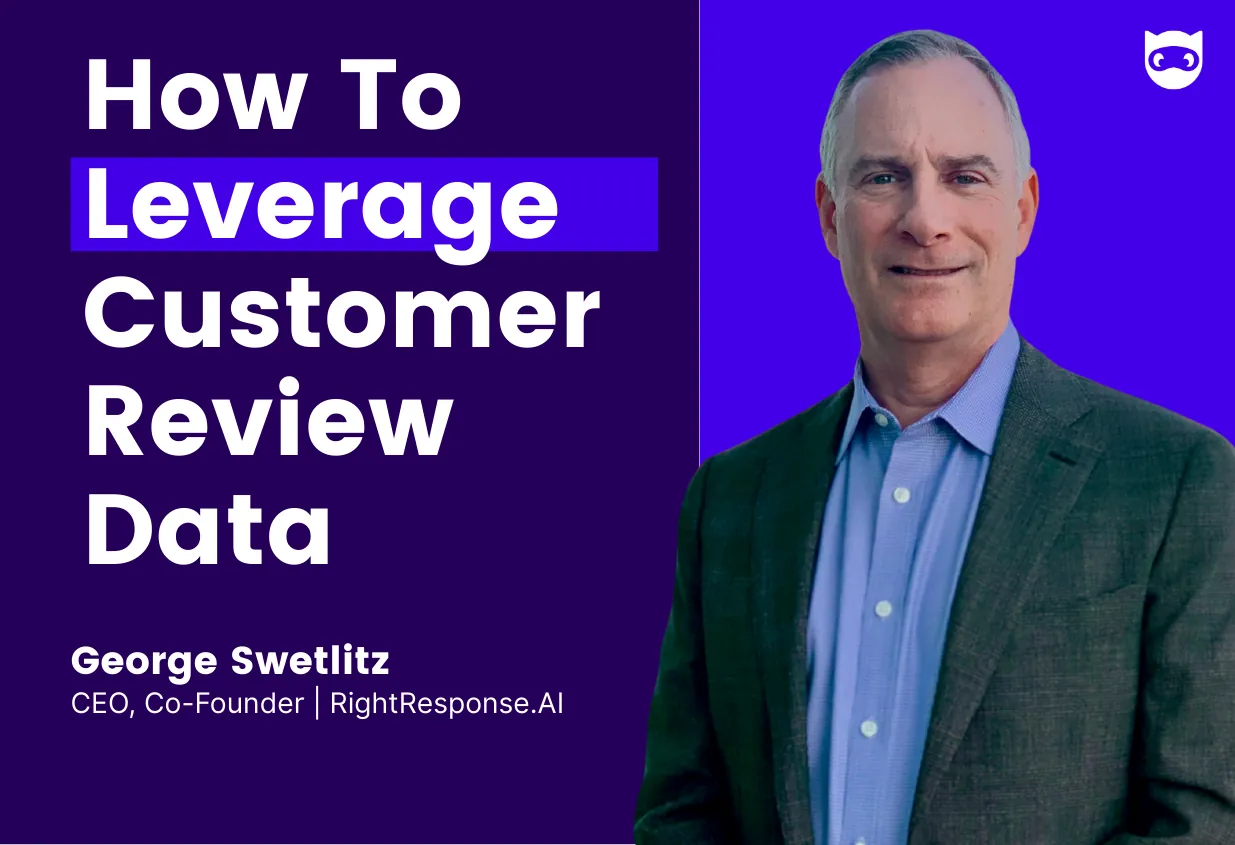
George Swetlitz has run businesses at a scale where the difference between a good location and a struggling one isn't always obvious — and the data to explain it isn't always accessible.
As the former CEO of Alpaca Audiology, the largest independent audiology clinic group in the United States, he scaled an operation to 220 locations. What he found along the way shaped how he thinks about marketing data analysis, measurement, and what it actually means to respond to information rather than just collect it.
He joined What Gets Measured to talk through how sentiment analysis breaks down at scale, and why the most valuable customer data most businesses have, might be the data they're actively ignoring.
Running 220 locations of a franchise means running 220 versions of the same question: how can you scale a singular experience across diverse locations?
George describes a pattern that became impossible to ignore. "A common problem would be that we would have two locations in what seemed to be similar demographic environments, but one would perform very well and the other one wouldn't."
The instinct is to look at staffing, local competition, foot traffic. But when those variables don't explain the gap, reputation becomes the next variable to examine, and that's where the data kicks in.
The platforms that aggregate customer reviews — Google, Yelp, and others — hold the signal. But getting it out of a marketing data pipeline is another matter. "Many applications are closed gardens or walled gardens," George says. "You can do a lot within it, but you can't take data out." At Alpaca, they had data engineers. They had the analytical appetite. What they didn't have was access to the granular review data that might have told them, location by location, what customers were actually experiencing.
That gap — between the data that exists and the data that's usable — is where the real operational problem lives.
Even when businesses do access their review data, most stop at the surface. And the surface, George argues, is close to useless on its own.
"What most platforms give you is a view of your ratings. 4.5, your average is 4.7. But it's when you start to peel the onion, it's much more complicated than that." His example is direct: two restaurant locations, both rated 4.7. One is strong on food, weak on service. The other is the reverse. "They both average to 4.7, but for very different reasons. So in order to understand what the problem is — what people are talking about — you have to do more."
The same critique applies to NPS. George doesn't mince it. "NPS to me is kind of interesting, but it's unusable. It tells you yeah, customers like me or they don't, and I can compare that to my competitors — but then I'm like, well, why? Like, why don't they like me?" A score without a cause isn't a measurement. It's a placeholder.
The layer underneath — voice of customer, sentiment analysis, the specific topics and phrases that drive ratings up or down — is where the actual information is. And for most organizations, that layer is either inaccessible or unexamined.
Here's where George shifts from diagnosis to what companies can actually do differently.
"The first thing that companies need to recognize is that the review and the response is a marketing opportunity. It's not a task that has to get done."
When review response is treated as a compliance item — something to check off — the quality of the response reflects that. Then you get template replies, generic acknowledgments, or in most instances, nothing at all. George is direct about what non-participation costs.
"The review space is a conversation between your customers and the rest of the world. And the question is, are you going to participate in that conversation or not?"
Not responding is a choice. A template response is also a choice. And increasingly, so is a generic AI-generated reply — one that mirrors the review back without adding anything. But George has a data-informed take on that. "Generic AI responses are a net negative," he says. "They actually work against you, they hurt you."
The reason the stakes are this high comes down to who is reading reviews and when. The audience for every review response isn’t simply the person who left the review, but every future customer reading the exchange while deciding whether to show up.
"There's no one closer to the bottom of the sales funnel than someone reading a review. They're making a decision."
The operational consequence of getting this wrong shows up in how leaders manage location performance. Without granular sentiment data, the conversation between a regional manager and an underperforming location goes one direction: "You just go yell at them. You say, 4.5's not good enough. I want you to get to 4.7. I don't have any other information to give you. If you want to go figure it out, go read the reviews yourself."
That's not management, so much as it is noise. The alternative, George says, is to get curious. "You need to analyze the information that customers are freely giving you — they're giving you this information like a gift. I don't have to go do a survey. I don't have to pay anybody."
When that data is properly analyzed, the conversation changes entirely. "Mary, you have a 4.5. There's one thing you need to focus on. People aren't satisfied with the way you handle the waiting, the reception and the efficiency of that. That's what people complain about. So fix that."
One problem. Clear direction. Grounded in what customers actually said. That's what separates a business that has data from a business that knows how to use it.
The through-line of everything George describes — from the walled gardens at Alpaca to the "go fix it" management problem — is a distinction he draws cleanly at the end of the interview.
"Do you run your business reacting, or do you try to develop a hypothesis about what you need to do to be successful and then drive in that direction until data tells you that you're not right?"
Reaction is fast and feels decisive. But it's downstream of events, shaped by whatever just happened, not by a considered view of where the business needs to go. Response, in George's framing, requires something harder. You've got to want to form a hypothesis, commit to it, and use data to test whether you're right.
"The core of that is information. Generating as much data as you can in the areas that you think are important, and then developing a hypothesis and testing that as you go forward."
For enterprise data teams and the agencies supporting multi-location brands, this is the actual mandate — not building dashboards that report what happened, but building systems that help operators decide what to do next.
The data that customers freely give through reviews is one of the most direct inputs available. Whether businesses treat it as a gift or a task is a management decision. And according to George, most are still making the wrong one.
Listen now: Spotify | YouTube | Apple
Connect with Scott: LinkedIn | Website
Subscribe to What Gets Measured for more conversations like this.
Jake: I'll introduce you real quick. Um, yeah, I'll just say, George Switz, welcome to the show. Here I go. George Swetlitz, welcome to What Gets Measured. How are you, sir?
George Swetlitz - RightResponse AI: great. Great to be here. Thank you.
Jake: Excellent. So right response ai. This isn't, this is your current company, but you, you had a [00:01:00] previous job where I says, here you scaled to 220 locations, and I'm just thinking. That's amazing to keep one business going is, is a lot to keep 220 locations going. I just want to, you know, speak to you as, as you know, you're coming from this operations mindset. What, what's the pain right there? I mean the, the data measurement at that scale, what, made you think like, there might be a better way to handle this? Or is this scale too much? Just talk about that. How did you go from zero to huge?
George Swetlitz - RightResponse AI: Yeah. Yeah. So, you know, so growing, you know, this was an audiology business, so think hearing aids. And, and we were, you know, scaling that business through a combination of organic growth, opening locations around established businesses that we have, but then also acquiring businesses and, uh, very strong businesses and bringing them into [00:02:00] our footprint.
And, and as we did that. As you can imagine, there's lots of issues around scaling these kinds of businesses and, and part of those issues were around reputation and the impact that reputation has on your ability to generate organic growth. And so, for example, a a common problem would be that you, we would have two locations in what seemed to be for us similar.
Demographic environments, but one would perform very well and the other one wouldn't. And so why? Why would that be? And so as we did more research, we found that, you know, in some cases that might have to do with the competitive environment. In other cases, that might have something to do with the reputation of that business.
Then we started thinking about, well, how do we measure that? How do we understand it? How do [00:03:00] we collect data? And it was very difficult to do that. So there are platforms out there that are reputation management platforms, but very infrequently can you get data out. You know, many applications are. You know, closed gardens or walled gardens, you can do a lot within it, but you can't take data out.
And so we had a hard time getting the granularity of the data that we were very analytics heavy as a company.
Jake: And George, is this like Yelp? Are you talking about those type of platforms
George Swetlitz - RightResponse AI: Yeah, exactly. So Google, Yelp, you know, any kind of review management source
Jake: Right, yeah. Here you
George Swetlitz - RightResponse AI: location-based businesses.
Jake: Okay.
George Swetlitz - RightResponse AI: Exactly. And so, you know, we had, you know, we had data engineers in our company. We had a lot of sophistication around that, but we had difficult time getting the data. So [00:04:00] fast forward couple years, we ended up, it was private equity backed, so we ended up selling the company and then chat g PT came out.
And so we thought that AI could help in a lot of the elements of that, kind of the, the problems that we had.
Jake: So, so, I mean, when you aligned on reputation management, was that the big takeaway from, uh, the, the, the former audiology company? You were like, man, reputation was a big ding. Um, is, I mean, it
George Swetlitz - RightResponse AI: I mean it.
Jake: Most people don't start a company based on this if they didn't think that was the main issue here. Wait, one question. Reputation versus, um, workforce management. You just, was it reputation that helped you or was it better management? Like, you know what I mean? Like if you just had better managers in that store, the reputation would be better. Is
George Swetlitz - RightResponse AI: Yeah, but you know that that is like, you have to manage all of it sometimes, right?
Jake: all
George Swetlitz - RightResponse AI: Right. You have, [00:05:00] right, you have to manage everything and so, you know, making sure, but how do you know that you have a problem? How do you know?
Jake: Well,
George Swetlitz - RightResponse AI: And so it's
Jake: I, this
George Swetlitz - RightResponse AI: right. I.
Jake: like, you're, you're looking at disaggregation, five stars, one star, whatever. It, you can't go through looking every review. You can't track the sentiment shift. Uh, and so, so speak more about this, this, this pivot that could help you kind of look at aggregate data and make sense of it.
George Swetlitz - RightResponse AI: So, so you're exactly right. What, what most platforms give you is a view of your ratings. 4.5, your average is 4.7, but it's when you start to peel the onion, it's much more complicated than that. You could have two restaurant locations, both have a 4.7, but one could be good at food and bad at service, and the other could be good at service and bad at food.
They both average to 4.7, but for very different reasons. So in order to [00:06:00] understand what the problem is, what are what people are talking about, you have to do more. And so that's. Voice of customer sentiment analysis, and now you're starting to generate lots of data. So you've got a review that's got a paragraph, but now you have, well, there's all of these things that people are talking about and that sentiment's either positive or negative, and there are certain phrases that caused.
The, you know, that to trigger. And so we didn't have any of that data back then. We, we didn't have it. You couldn't, you couldn't get it.
Jake: the idea was right. The idea was start something, build something where that, where we create that data, we, we use and leverage that data. And that's essentially what we, what, what the idea was behind Right Response.
That's so cool. And so you're, you're hitting on something that a couple previous guests have talked about is causation correlation. These are not the same things. So, you know, when you're wondering what caused something, that's a heavy, heavy question. [00:07:00] sentiment analysis, you know, it's like correlation, statistics.
How do you tune, how do you tune the ai so it, it isn't making correlation mistakes and it's getting you close to causal relationships.
George Swetlitz - RightResponse AI: Most large organizations have a set of KPIs. They know how they think about the business.
Jake: Hmm.
George Swetlitz - RightResponse AI: got products that I sell and people tend to evaluate the products in this way, or I offer these services, and people tend to think about that in a certain way or,
Jake: uh, NPS is almost our internal review system, know?
George Swetlitz - RightResponse AI: right. So think about NPS, I mean, that's a different, NPS to me is, is almost, you know, it's, it's kind of interesting, but it's unusable. Right, because it doesn't tell you anything. It, you know, you get a, it tell you Yeah, customers like me or they don't, and I can compare that to my competitors, but then [00:08:00] I'm like, well, why?
Like, why don't they like me?
Jake: crazy because a lot of people are dying off of that number. They're living and dying off of that and, and whenever I'm asked to ask, you know, one through 10, how'd we do? Seven. I just want to get outta your form. You know,
George Swetlitz - RightResponse AI: Right.
Jake: really giving you the. T No, that's, that's why I love to go where the place where these conversations are happening, you have to have the wherewithal to go in and listen for context.
You have to know what's happening that might cause these things. So, you know, how do you disaggregate sentiment data? You know, like, like what is it, what, what is the disaggregated sentiments? Give you that, those star ratings, obviously, like you just said, they can, but kind of like how does that change, how does now an operator who's looking, you know, through your interface being like, ah, this
George Swetlitz - RightResponse AI: So that's, that's exactly, that's exactly the question because the reality is. You have somebody that [00:09:00] has a 4.5 average rating in their business. So what do you do? You just go yell at them. You say, no, it's four point five's not good enough. I want you to get to 4.7. Right? That, because that's, I don't have any information to give you, right?
I don't have any other information to give you. If you wanna go figure it out, go read the reviews and figure it out for yourself. But just as the leader I'm saying, go fix it. So that's what happens in most companies. What really, what you need to do, or what really you need to do is you need to analyze the information that customers are freely giving you, right?
They're, they're giving you this information. It's like gift, right? You know, I don't have to go do survey. I don't have to pay anybody. They're like freely giving me this information, and then I can go back and say, you know, Mary, you have a 4.5. There's one thing you need to focus on. People aren't satisfied with the way you handle the waiting, the reception and waiting and the efficiency of that.[00:10:00]
That's what people complain about. So fix that and here's our SOPs and here's whatever it's, but fix that and you will have a higher rating. Like that's what our real company does, right? That's what a company that leverages data will do.
Jake: It's just a very interesting thing because you said to go fix it. that's like the, the modus operandi. Just go fix it. And I worked in, uh, hotels. I worked, um, law firms. You want to talk about people who are getting ratings and reviews. Um, but one of my jobs at the hotel was to respond to every review and, they were like, just, just write whatever. Was what I was told, and I, I, I kind of took it, it was one of my early jobs as a marketer, and I took it seriously. I talked to them like they were people. I made sure that I stood up for, you know, the rights of the, the [00:11:00] hotel. Like if you got, know, if you got stuck in the bathtub, is that the bathtub's fault? You know, I, how can I say that diplomatically? after a while, the hotel was like, loves. The responses you're giving. Here, two, four. They hadn't said anything to any of 'em. One star, four star, no response. But within a month, the hotel was like cheering me on because it was just a place where they didn't want to, like people are kind of saying good things or bad things, but I just don't even want to go in there. And I just did a backlog and worked forward and by the time I got done, all I did was show up as a human to a conversation. I made like friends with, you know, some of the, like, the people that were complaining were like, I thank you so much. It was just like, and it blew my mind 'cause I was like, this is marketing. I, I'm out here thinking
George Swetlitz - RightResponse AI: That's right.
Jake: marketing [00:12:00] is a billboard, marketing is a, you know, it's this, it's, it's being seen seeing people showing up to relationships. And I love that you said they freely give it. Um, but one thing that I had to stop these fools from constantly doing is arguing with the reviewers and respondents online.
Like you have a lawyer talking about, you know, client attorney, confidential stuff in
George Swetlitz - RightResponse AI: Right, right.
Jake: saying, no, this client doesn't, I was like. Don't do it. So what's your response to people who are like, no response to the reviews, or respond to the reviews? Or how do you engage with, you have the review, you have the thing, how do you speak back to that person?
How do you keep that, know, nice freely given, you know, wheelhouse going?
George Swetlitz - RightResponse AI: Yeah, so the first thing that. Companies need to recognize is that the review and the response is a marketing opportunity. It it's a marketing opportunity. It's, it's [00:13:00] not a task that has to get done. It's not, you know, it's, it's none of that. It's a marketing opportunity. It's the ability to participate in a conversation.
So the review space is a conversation between your customers and the rest of the world. That's. That's what it is. And the question is, are you going to participate in that conversation or not? So how do you not participate in the conversation? You don't participate in the conversation. If you don't respond, you're, you're not participating in the conversation.
If you use a template response, thank you, we appreciate your, you know, whatever. Right? This standard response again and again, again, you're not participating in the conversation if you use a generic AI response. So that's the big thing right now. So someone says, I love the steaks, but I hated the fries.
And the response says, oh, we're glad you love the steaks. You know, we're [00:14:00] disappointed that you didn't like the fries. It's a meaningless response. Everybody knows it's a meaningless response. All you're doing is taking up space. And so I think that it's a net negative. Generic AI responses are a net negative.
They work against you, they hurt you. Right. We've done surveys with customers, kind of random things where they tell us that they, they know now what a generic AI response is, and they don't like it. Right?
Jake: audience. Let's just be, we are them. You know what it's like to get a canned response from somebody? Are, are you like, hooray? No, I.
George Swetlitz - RightResponse AI: Right. And so. Our approach to that was to say, if it's a marketing opportunity and it's an opportunity to talk to all sorts of people that are in the process of making a decision. You don't go read. You don't. You don't go read reviews for fun. You read [00:15:00] reviews because you're trying to make a decision like you.
There's no one closer to the bottom of the sales funnel than someone reading a review. They're making a decision. Okay.
Jake: Totally.
George Swetlitz - RightResponse AI: So if that's the case, then don't you want to take all that great content that you spent lots of money developing on your website and bring that content to your response, right? So if on the website you bri, your restaurant and you know, all your steak comes from this farm in Colorado where it's grass fed, beet, whatever it is.
You put that you're proud of that and you put that on your website. If someone writes a review that says, oh man, that was the best steak I've had in Tallahassee, then don't you wanna say, yeah, we think it's, we think it's great steak. We've been working with this farm in Colorado for 22 years and we [00:16:00] buy all of, it's all organic wrapped.
Don't you wanna say that? So that when someone's reading it, they go, man, I wanna eat, I wanna try that thing. That's what people don't. That's what they're missing, right? Is that you have, and so that's what our platform does. You kind of catalog all of these things. What you said before when you were writing them by hand, right?
When you were writing them by hand, right? If you could have said to a system, Hey, if somebody makes a comment about, I wish we had. You know, if somebody writes a a com writes a review, complaining about the fact that you know they had to be in a pool with all sorts of toddlers in the response, write that there's an adult pool by building C.
Next time, visit the adult pool by building C. That's what you would've said. So wouldn't it be great if, if we could [00:17:00] automatically do that so you don't have to think about it all the time?
Jake: Yeah. Well, and, but it, it's nice to have somebody who has. Experience on the frontline with folks, giving you a way to make sense of the data. That's why I, I wanna move into the data conversation because subject matter expertise is important. If you are getting all of these, you know, multi-location brands, they have mountains of review data, sentiments, you know, competitive benchmarks. Um, at some point somebody has to make a right response to all that data. know, so I'm, I'm kind of wondering how. How, just in general, not, not in regards to Right response or maybe in the way that you've built your engine, how do you get people the data that they need in a way that they can use it and then into a place where they can act on it transmitted, you know, just the general, a approach to, from data to [00:18:00] trust.
George Swetlitz - RightResponse AI: Right. Well, as, as you, as you know, kind of building a system yourself or having a system yourself, there's, there's this kind of tension between simplicity. Everyone wants something that's simple and easy to use, and. Richness of data, you know, and all of those things, right? There's this trade off. And so in our platform, we, we provide certain, certain screens and dashboards that, that are different than most people.
They're rich. So for example, we have something that's called the ratings grid. And so what we do is we look at. What are the topics, both positive and negative, that people talk about in a five star review versus a four star review versus a three star review versus the two. And so when you look, when you just visually look at it, you can see [00:19:00] what, what starts to shift as the rating goes down.
So it's kind of an interesting way to think about kind of the connection between rating and KPI. Okay, so we, we do things like that, right? It's context. Yeah. So we do things like that. But then for our larger clients, they wanna take all the data. They wanna, they maybe wanna build a model, they wanna do a lot of things.
So we, we allow our larger clients to take this granular data, which would be the topic, the strength of the sentiment, the exact phrase that triggered that topic. You can imagine for every review there might be 20 of those things, and now you have all these reviews. So it's a, it's a, it's a large amount of data that they can extract and use it how they want.
The same thing is true of competitor data. So what [00:20:00] people don't necessarily think about is that anything that you know about yourself, you can also know about your competitors. Right. Why are they successful? Right? What are, what are their problems? What does that mean in terms of how I position myself from a marketing perspective against my competitors?
So we can look at all of the, you can come into our system and you can identify who your competitors are, and we can look at that, and then we can, we can develop the sentiment analysis using your KPIs for your competitors.
So
Jake: I'm, I'm just thinking like, but the takeaway from all of this is if you have data, you have to do something with it. And I like what your whole game is, is to figure out how to respond, you know, to, to something. And, and I, I think that's, it's one of the big [00:21:00] problems is, is I have the stuff, I'm not sure not how to act. How to respond.
George Swetlitz - RightResponse AI: right.
Jake: there's something about the way you are just approaching data in general is just like, what's the response that's required? It's, it's, feels empowering,
George Swetlitz - RightResponse AI: Yeah. You know, and is exactly what you just said. When we say response, we're not talking about the physical response to the review. We're talking about how do you respond to the sentiment? What's the right response? How do you. How do you help your employees do a better job? How do you understand, how do you respond to the competitive environment that you're in?
So it's all of these responses that drive your business forward. So when we say right response, if it's this broader sense of like, how do you respond in general to the data that's available through this review ecosystem?
Jake: And, and this is, maybe we can just, uh, end generally I'm gonna ask you one more, but reaction. [00:22:00] I think I've been, you know, a little overwhelmed as you know, it happens. A lot of technical changes happening. Ceaseless change, and then you kind of wonder how can I balance those things, know? Do you have any advice, um, you know, in regards just in general, like how reaction and response. Um, do, do you think of them differently? Do you have any advice on people? Because it feels like you're making a really compelling case, but I think a lot of people are reacting mostly and they would love to respond. Is, is there maybe something general you could give us
George Swetlitz - RightResponse AI: Yeah. I, I, yeah, I mean, it's, it's a management philosophy. So it's, do you run your business reacting or do you try to develop a hypothesis about what you need to do to be successful and then drive in that direction until data tells you that you're not right, or maybe you made [00:23:00] a mistake or maybe you need to steer in a different direction.
And that's always been the approach that I've taken in organizations that I've been in. And the core of that is data. The core of that is generating as much data as you can in the areas that you think are important, and then developing a hypothesis and testing that as you go forward. So I would say, you know, that's how I would respond to that.
Jake: Great response. He didn't feel too reactive when he gave that one. He had it in his pocket. Um, so you've given us a lot to think about the importance of reviews. I just thinking about sentiment analysis for competitive, uh, research. That is kind of cool. You, you can go and do that. You can do it for yourself, know yourself, know your audience, know your competitors.
Be stronger. If there's one way. One piece of advice that you wanna leave us with? What do you think it is, George?
George Swetlitz - RightResponse AI: I would say to companies, you know, location based businesses or businesses that get lots [00:24:00] of reviews. To really think critically about how to leverage that review ecosystem to drive their business forward. I think it's a, a huge missed opportunity for many, many businesses.
Jake: Yeah. Yeah. And it's not just a task to check off people, get with George, um, and follow him. How can we connect, um, and learn more about you online?
George Swetlitz - RightResponse AI: So, right response ai.com, that's our site. People can reach out to me there. We have the ability to schedule appointments and things like that. We love talking to people about their businesses and I'm on link LinkedIn, right? Response and George Sweats. We're on LinkedIn, so happy to connect with people there as well.
Jake: Okay, I'm not gonna let you go until we play a game called cheese or chocolate, where I ask you two questions and you gotta choose one. Uh, are you ready?
George Swetlitz - RightResponse AI: Sure.
Jake: Cheese or chocolate?
George Swetlitz - RightResponse AI: Chocolate 100%.
Jake: Whoa. time is it? probably chocolate o'clock where you are. It's okay. [00:25:00] Um, treadmill or trail?
George Swetlitz - RightResponse AI: I'm not much of a treadmill guy. I I just get bored if I'm on, if I'm on a trail, I can, I can appreciate where I am and what I'm doing.
Jake: that's,
George Swetlitz - RightResponse AI: Treadmill's just for me.
Jake: that's kind of what I was wondering if it, if somebody was like all treadmill, I would've been like, yeah. Consistency trail's the right option anyway. Um, box lunch or bag lunch.
George Swetlitz - RightResponse AI: I don't even know what the difference is between a box,
Jake: Well just imagine. Then you have, there's a lunch in a box and a lunch in a bag. Which one are you gonna take?
George Swetlitz - RightResponse AI: probably the bag. No, actually I would say if it's a reusable box, I would go with the box.
Jake: Good
George Swetlitz - RightResponse AI: How about that?
Jake: No, I love that. And that made sense. I was like, man, but is [00:26:00] no right answer in this game. Um, okay, here we go. Books. Are you one at a time or are you slowly going through a stack?
George Swetlitz - RightResponse AI: Stack?
Jake: Yeah.
George Swetlitz - RightResponse AI: A stack?
Jake: touch a bit? Touch a
George Swetlitz - RightResponse AI: there's just, there's just too many books. There's a lot of books and you know, you don't always make it through everyone, so you gotta have a lot of them going.
Jake: Well, I, I've gotten to that point where you don't feel bad, like if you've gotten 80 pages in and it's not grabbing, like, I'm, I'm okay to, to
George Swetlitz - RightResponse AI: it's
Jake: Life is too
George Swetlitz - RightResponse AI: okay
Jake: Yeah. Yeah. Okay. Good. All right. We're hitting. Okay. Two more. Flying or invisibility.
George Swetlitz - RightResponse AI: flying. I'm a pilot, so I gotta say flying. I.
Jake: Are you piloting? Where are, are you, you got your license and everything?
George Swetlitz - RightResponse AI: Yeah, yeah,
Jake: Well,
George Swetlitz - RightResponse AI: I love flying.
Jake: Um, fine. Well, as you were, sir. Okay. Ooh, this is the last one. And I know it's contentious, so I saved it for the end band [00:27:00] of bagpipes or a sideshow of slide whistles.
George Swetlitz - RightResponse AI: That's an, I mean, I know what a bagpipe is, but I don't know what a, what's a, what was that other thing?
Jake: know, that, woo. You know,
George Swetlitz - RightResponse AI: Oh, probably bagpipes. I like, I, I like the way, I like the way bagpipes sound.
Jake: It's the safer option. Both a little jarring, but no wrong answers. On today's show, you win the prize. George, uh, let me stop this recording.