Team NinjaCat
A three-person ecommerce team at Daye North America produced $1.5 million in measurable sales impact in a single season. The team had no data team and no engineers.
In a recent webinar, NinjaCat CEO Paul Deraval used Daye's result, and other NinjaCat case studies, to anchor the argument of his presentation, "Small Team. Enterprise Impact." The next wave of AI in marketing, states Paul, is not a better chatbot or a single agent. It is a factory, and a small team that builds one "can truly outrun the 100-person team down the street."
Below is a recap of the research, the case studies, the live builds and the two-week plan Paul recommends. The builds themselves, and the Q&A, are best seen in the full session, above.
Paul opens with what he hears from marketing leaders every week. The CEO expects AI to transform marketing. The team has a copilot license, six vendor pilots, and a week-long wait to learn why sales dipped. A dashboard reports the dip. The dashboard does not explain the dip, recommend a fix or apply one.
NinjaCat's original research, The AI Maturity Gap, surveyed more than 500 marketing and advertising leaders averaging $26 million a year in paid media, with results verified independently by UserEvidence. Seventy-eight percent said their data is still fragmented across platforms and spreadsheets. Only 37 percent have a unified source of truth. Only 8 percent orchestrate AI across tools and teams.
Beyond the survey, PwC asked more than 4,000 CEOs what AI has done for their business, and 56 percent said no revenue gain and no cost savings. Gartner expects more than 40 percent of agentic AI projects to be cancelled by the end of 2027. In engineering, Paul noted, "the 10x engineer is real." His question for the session: what is holding back the 10x marketer?
His answer began with three blockers, and the model is not one of them.
"The model is not the bottleneck," says Paul. "Everything around it is."
Paul's read of the timeline: copilots took over in 2025, and "I think agents likely peak in the first half of 2027," with a few agents doing a few jobs under heavy babysitting. He expects factories to take off in the second half of 2027.
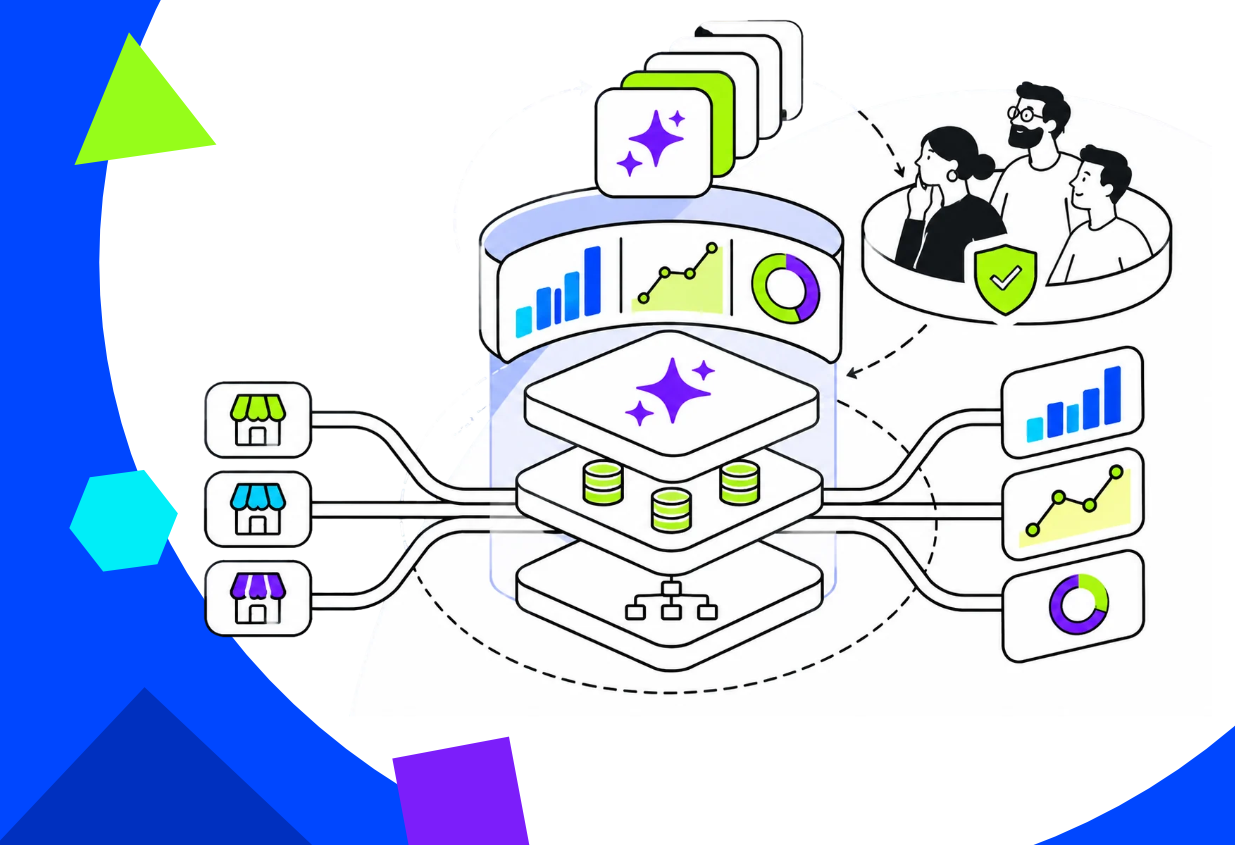
A factory starts with live, harmonized data from every platform. Specialist agents watch for pacing problems, CPA spikes and broken tracking. Every proposed action is checked against your rules before anything ships, and approved actions run directly in the platforms. The human becomes the plant manager, who sets goals, writes rules and handles exceptions.
Paul frames autonomy as a ladder. Most teams, in his view, sit on step one or two, where AI suggests and the team does the work. At step three, someone approves every move, so the factory runs "at the speed of one person's inbox." Step four is the leap that matters: the agent acts inside the rules you wrote, and you see only the exceptions.
Engineers let agents run for days because code has a compiler and a test suite. Marketing's rules live in PDFs, and until recently the only judge was a person, or the same AI grading its own homework.
Paul pointed to Jev, a new kind of "decision model" released on September 15. Jev writes nothing. Jev answers yes-or-no questions in under a second and returns a confidence score. "I think this is the decision models moment," Paul said.
His example: an agent wants to shift 8 percent of the Texas budget to Meta with new copy. Is the shift under 10 percent? Yes, at 90 percent confidence. Is the shift on the approved plan? Yes, at 97 percent. Is the copy a medical claim? 58 percent, which is not sure enough, so the action is held. A person checks one question instead of the whole plan. NinjaCat's Advanced AI Policy Guardrails apply the same logic by compiling an uploaded policy document into yes-or-no checks.
Daye North America sells outdoor power equipment through big-box retail and online. The team once spent two weeks every cycle compiling analytics before anyone could decide anything. Their test was to grow a core product 20 percent with no increase in spend. Each human expert trained a named AI agent for marketing on their own knowledge: Parker reads point of sale and pricing, Gia reads geography, Drew watches inventory and demand, Wyatt watches the weather ("if you sell snow blowers, the weather is your media plan"), and Victor turns reviews, Q&A and Reddit into a ranked action list per SKU. Every agent was connected to every other agent. The result: $1.5 million in measurable sales impact in one season, 80 percent less manual analysis, two weeks of compilation cut to two hours, and 15-plus hours a week back for product copy. Read the Daye case study.
VML, a WPP agency, runs an agent on the NinjaCat platform that monitors hundreds of Meta placements and about 20 million sessions for a Fortune 500 client. The agent flags creative fatigue before the performance curve turns. The results: a 30 percent lift in engagement, a 53 percent lift in site conversions, and analysis effort down to a tenth. Read the VML case study.
Dental Revenue, a 15-year-old agency for cosmetic and restorative dentists, had the data and nothing running on it. Two agents changed the picture. Negative Keyword Nancy reviews every client's Google campaigns for wasted search terms. CARL, the call analysis and reporting agent, grades every recorded call by front-desk employee, and one employee converts 40 percent of callers while another converts 10 percent. Practices once paid about $5,000 a month for that coaching, and the coaching is now part of the program. Client results are up more than 30 percent. Read the Dental Revenue case study.
From the three teams, Paul drew four rules. A human expert trains each station. Training and data both have to be good, because a specialist fed bad data becomes "a chatbot that sounds confident." The agents connect to each other, so Daye caught a supply risk and a demand risk on the same product. And every action passes a judge.
Paul starts with data: connected sources, uploaded brand knowledge and a prefetched warehouse, so agents are not making constant live API calls. From there, the recording shows:
One lesson ran through every build. The marketing engineer closest to the task should build the agent, because "only they know what great looks like." Paul also advised building general agents and keeping account preferences at the account level. Just Global, a NinjaCat customer, runs 200-something agents across 18 departments, and agencies should avoid ending up with 100 agents times 100 clients.
Paul's plan is "big vision, tiny iteration." In week one, connect your channels and build an analyst agent that surfaces recommendations. In week two, add a paid search copilot for Google Ads. Two agents make a manufacturing line, and a supervisor agent is the subject of a future webinar.
In the Q&A, Paul's advice for finishing was blunt: pick a single workflow, ship it and get people using it. Then widen the specialist into a generalist, so Negative Nancy becomes PPC Paula. Putting agents in Slack or Teams lets colleagues learn from each other's prompts.
To see the offers, builds, and hear the full Q&A, watch the recording →
Paul's answer to the question he opened with was short: the 10x marketer is possible, and leaders can empower their teams to become one. Two requirements ran through the whole session: data unified across every account, and a judge that checks each action before it ships. Book a NinjaCat demo to see Enterprise Marketing AGI unify data across your brands and accounts, and check every agent action against your brand, legal, media-plan and budget rules before it runs.