Team NinjaCat
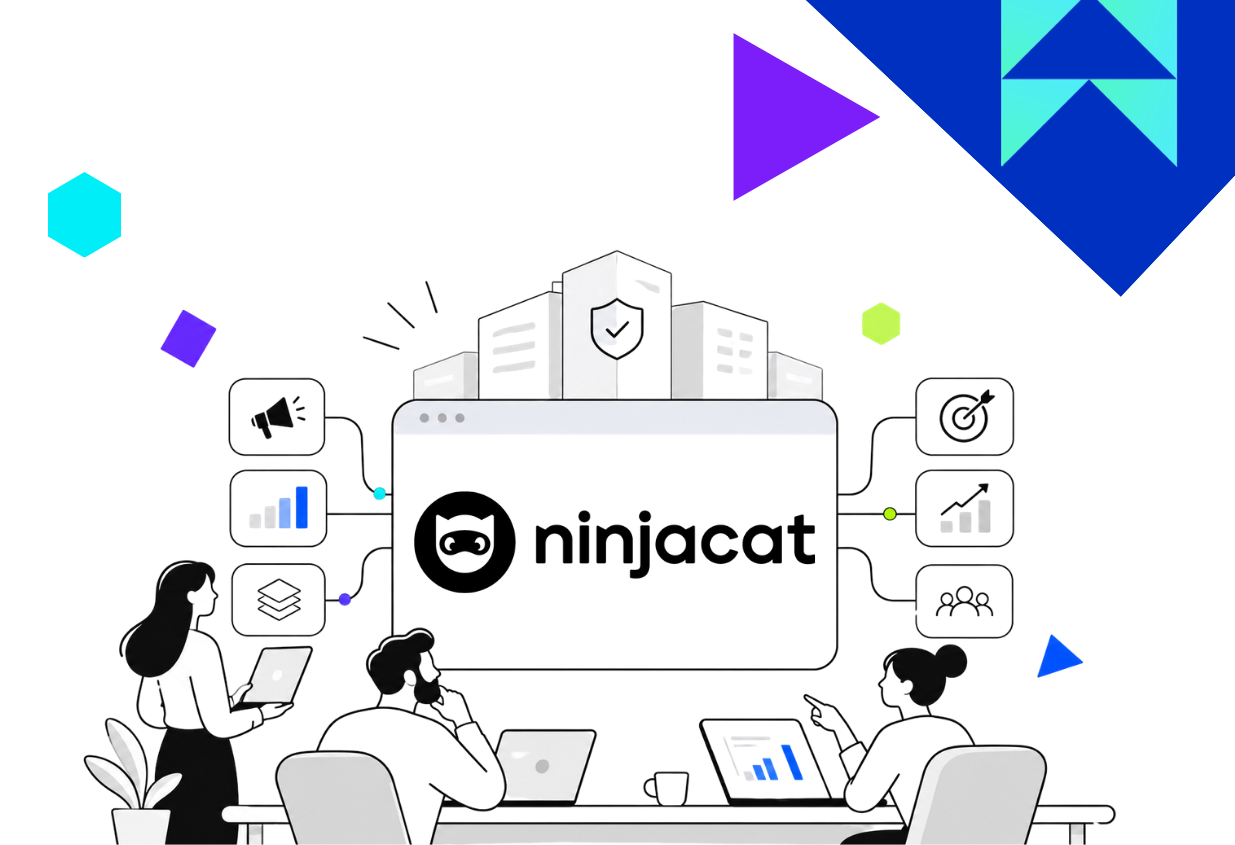
Today we introduced Enterprise Marketing AGI, a new category of AI technology. In plain terms, Enterprise Marketing AGI is a governed, organization-wide system that connects marketing data, intelligence and workflows, so AI agents can analyze, recommend and act across every team, brand and account under rules the business sets. The category moves marketing from isolated tools and dashboards, to an agent operating system that drives outcomes across accounts, brands, and markets.
Most enterprise marketing teams don't have an AI shortage. They have too much AI.
One team runs a frankenstack of disconnected platforms. In another, individual marketers build their own siloed assistants. Each tool does its job, but none was built to securely scale across an entire marketing organization, and both teams and their techstacks don’t typically share what they know with the larger org.
In our experience, most AI pilots stay read-only. The reason is practical. No one will let an agent touch spend without approvals and audit trails. Without a way to enforce brand, legal, and budget rules automatically, approval processes differ from team to team. Agents produce recommendations, and people still do the executing.
Full implementation is rare. In our AI maturity research, only 8% of marketing leaders surveyed had fully implemented AI.
"The strength of the model was never the issue," says Paul Deraval, NinjaCat's CEO. "DIY data pipelines and messy in-house marketing data stacks have made it almost impossible for marketing leaders to manage AI organization-wide, let alone deliver results at scale."
The fix starts underneath the model. A unified marketing data foundation gives agents clean, consistent data to reason and act on. A scoped organizational memory gives them context that compounds with use. On top of both, policy-driven agents evaluate proposed actions against an organization's brand, legal, media-plan, and budget rules. The agents act within those controls and escalate exceptions for human review.
Claims about a product are easy to make, so we run our own company on the same intelligence we sell, and we now do it in the open.
Glasshouse Live is a webinar series that opens up our factory floor: real workflows, real results, and the parts still being built.
The first session showed how we use the platform across marketing, sales, customer success, support, product, and operations.
The session offered a simple test for what AI-native means. The unit of work behind that result is the factory. Chatbots answer questions, copilots draft, and personal agents let individuals tune their own workflows. In every case the improvements stay siloed. When one person finds a better prompt, nobody else benefits.
The factories that comprise Enterprise Marketing AGI, are shared systems built for one kind of recurring work, with one owner who watches every run. Every run is visible, scored, and fixable, and a repair improves the whole factory rather than one person's session.
For the full tour, watch the full webinar.
Across NinjaCat's customer base, organizations are moving past single AI tools and building connected, governed systems of agents. A global holding-company agency runs the same set of agents across separate client accounts, all drawing on a shared base of knowledge and standards. A national consumer brand connected point-of-sale, inventory and weather data to its agents, and linked a single insight to more than $750,000 in retail sales. A specialty agency serving hundreds of client practices built an orchestrator that hands work to specialist agents, with human approval before any change reaches a live ad account. A food manufacturer is using agents to combine sales and market data and map growth opportunities across seven territories.
The pattern is consistent. More than 1,000 custom agents are running across customer organizations, about four in ten of those organizations already run networks of agents working together, and autonomous agent runs grew by roughly two-thirds in six months, all on governed data from tens of thousands of connected marketing accounts.
These organizations didn't set out to build "AGI." They set out to connect their data, their expertise and their workflows, and to govern how AI uses all three.
Enterprise Marketing AGI is the name for what they're building, and NinjaCat is proud to be a keystone partner in engineering the future of this category.
Enterprise Marketing AGI is a governed, organization-wide system that connects marketing data, intelligence, and workflows. Instead of separate AI tools used by individual people, it gives every team, brand, and client account access to the same trusted data, shared business context, and specialized AI agents that work together under rules the business sets.
No. We're not describing a machine with human-level intelligence. "Enterprise Marketing AGI" describes general intelligence at the level of the organization. A single AI tool is good at one task. An Enterprise Marketing AGI system connects many specialized agents, the organization's data, and its expertise, so the whole marketing operation becomes more capable than any single tool.
General AI assistants are excellent personal productivity tools, but they start each conversation without your marketing data, your KPI definitions, or knowledge of which client or brand they're working on. Enterprise Marketing AGI runs on connected, governed marketing data. It keeps context for each account, coordinates agents across workflows, and applies the organization's permissions, approvals, and spending limits.
An AI agent does a defined job. An agent operating system (AgentOS) is the environment where agents run, share context, and follow rules. Enterprise Marketing AGI is the outcome: when connected data, specialized agents, and governance come together across the whole organization, marketing intelligence becomes a shared capability instead of a set of isolated experiments.
Yes, and it's already happening across NinjaCat's customer base. More than 1,000 custom AI agents are running across customer organizations. About four in ten of those organizations run networks of agents that work together, and autonomous agent runs grew by roughly two-thirds in six months. Customers include a global holding-company agency running the same set of agents across separate client accounts, and a consumer brand that connected sales, inventory, and weather data to its agents.
Not without permission. Organizations choose which actions need human approval, and agents pause for a person's sign-off before taking them. Today, most agent work is still started by people. About one in five agent runs is fully automated, such as scheduled monitoring and recurring analysis.
Governance is built in rather than added later:
It works best when marketing data from ad platforms, analytics, CRM, and business systems is connected and governed in one place. NinjaCat connects 80+ data sources and roughly 60,000 advertiser accounts across its customer base, and supports zero-copy data sharing through Snowflake. Customers are also connecting non-marketing data, such as point-of-sale, inventory, ERP sales data, and weather, to guide marketing decisions.
Through visibility and limits. Teams can see AI usage by agent, user, and model. They can set daily credit limits so adoption can grow without budget surprises. New agents default to a lower-cost model, with frontier models available when a task needs them.
No. It changes where their time goes. Agents take on repetitive monitoring, data preparation, and first-pass analysis. People still set objectives and standards, review consequential decisions, and manage relationships with clients and stakeholders. One customer put it simply: the work shifts from building the analysis to judging it.
Organizations that run marketing at scale across many accounts, brands, regions, or locations. That includes holding-company and independent agencies, multi-brand enterprises, franchise and multi-location brands, and media companies. These are the teams that feel the cost of scattered AI tools first.
Start with one workflow your team already understands, such as pacing checks, anomaly investigation, or client reporting. Connect the data it needs, define the rules and approvals, and measure the work that passes review. Then expand to more teams, accounts, and connected agents. Enterprise-wide intelligence is built one governed workflow at a time.
Book a NinjaCat demo to see Enterprise Marketing AGI unify data across your brands and accounts, and check every agent action against your brand, legal, media-plan, and budget rules before it runs.